
Agera PR’s work for the Swedish Board of Agriculture
How we helped protect nature from invasive plant pests
How do you get people to care about a threat they may never even have heard of? In this case study, we explain how Agera PR helped the Swedish Board of Agriculture put invasive plant pests on the public agenda – an issue that is vital to Sweden’s natural environment and food production, yet rarely attracts public attention. Through a carefully planned PR strategy, creative storytelling and extensive media outreach, we generated widespread coverage in both national and specialist media. Here’s how we made a complex public sector assignment relevant to the general public – and the results the campaign delivered.
The challenge
The campaign addresses a growing problem: as global trade and international travel continue to increase, so does the risk of invasive plant pests spreading to new countries. The consequences can be severe. Dutch elm disease is a clear example of what can happen when a new pest or pathogen becomes established. Thousands of Swedish elm trees have been infected and subsequently felled in an effort to prevent the disease from spreading further.
PlantHealth4Life is an EU-wide campaign led by the European Food Safety Authority (EFSA) and the European Commission, running in more than 30 countries. In Sweden, the campaign is managed by the Swedish Board of Agriculture, with Agera PR responsible for all Swedish communications since the initiative launched three years ago. For the Swedish market, we developed the campaign identity Keep Nature Healthy!
The target audience is exceptionally broad. Many Swedes order goods online from countries where insects, plants or other organisms could cause significant damage if introduced into Sweden. Millions also travel outside Europe every year, while gardening remains one of the country’s most popular hobbies, with hundreds of thousands of private gardens across Sweden.
The strategy
The objective was to increase public awareness of the risks posed by invasive plant pests while encouraging specific high-risk audiences to adopt practical preventative behaviours. The overarching goal was to help protect Sweden and Europe from plant pests that may spread through international travel and cross-border e-commerce.
The assignment combined broad public awareness with highly targeted communications aimed at those groups presenting the greatest risk: gardening enthusiasts, travellers returning from outside the EU, and consumers purchasing products from international online retailers.
We identified three key insights that shaped the campaign:
- Awareness of plant pests is generally low, even among committed gardeners.
- Delivering the right message at the right moment – for example immediately after returning from overseas travel – significantly increases its impact.
- Emotional, concrete stories attract far more attention than purely factual communications.
Media relations
The campaign was linked to an already established media interest in invasive species and plant pests. One particularly successful media story centred on specially trained detection dogs capable of sniffing out specific plant pests.
Both TV4 and Swedish Television (SVT) broadcast features showing the dogs searching around a recycling centre – a location identified as high-risk for the Asian longhorn beetle, which can occasionally arrive in wooden packaging imported from Asia.
Beyond these broadcasts, we secured editorial coverage in major national media including Swedish Radio and Aftonbladet, as well as virtually every leading gardening publication in Sweden.
Event activation
The campaign was present at several of Sweden’s best-attended gardening events, including the Stockholm Garden Fair, Borgeby Field Days and Bergius Botanical Garden’s Autumn Festival.
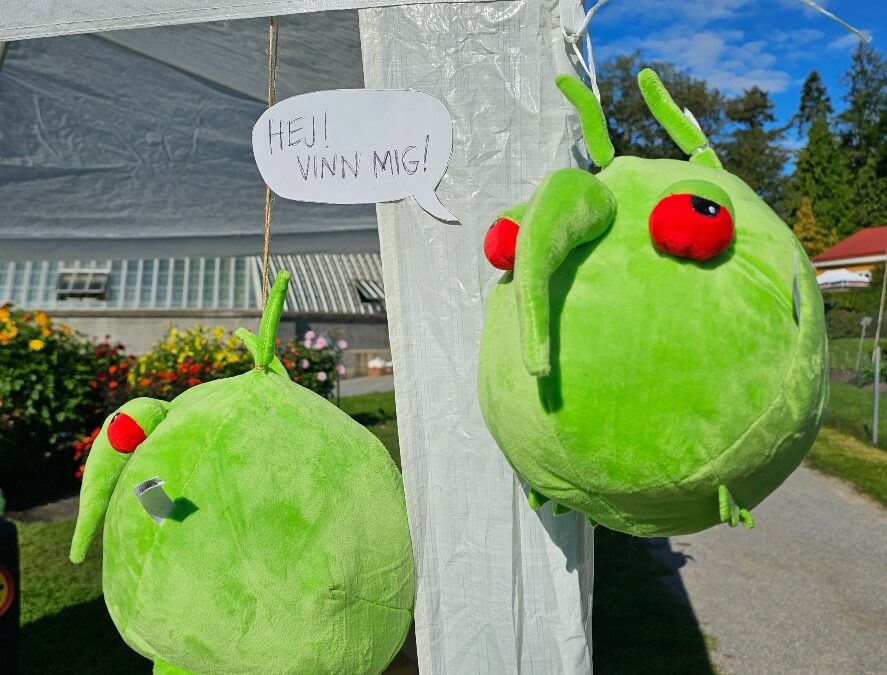
To maximise reach among families with children, we used the campaign mascot, Pesty – a cute yet mischievous creature representing the hidden pests that can travel inside plants and seeds. We produced large numbers of plush mascots, colouring books featuring an educational story, and other campaign materials, all of which were distributed or given away during the events. A full-size mascot costume was even produced, allowing Pesty to interact with visitors in person.
Targeted communication at airports
Working together with Swedish Customs, we installed highly visible posters in customs areas at Sweden’s international airports, ensuring the message reached arriving international travellers at exactly the right moment. We also purchased advertising space within airport terminals and carried out targeted outreach to passengers travelling on the Arlanda Express.
Influencer collaborations
We partnered with a carefully selected group of influencers specialising in gardening, outdoor living and travel. They created authentic organic content that generated strong engagement within their respective communities.
Examples include Sara Bäckmo, Filip Johansson (Gardenr) and Kristin Lagerqvist (Krickelin).
In addition, we purchased media space in carefully selected publications reaching the target audiences. These ranged from broad lifestyle titles such as Vi i Villa, Land and Vagabond to specialist magazines including Hemträdgården. We prioritised publications with a long lifespan in both print and digital formats, complemented by native advertising.
A campaign for schools
To raise children’s awareness of plant health, we developed a dedicated educational programme for pupils aged 6–9 (Years 1–3). The ambition was to turn children into “plant ambassadors” who would bring their new knowledge home and help increase awareness within their families.
We produced complete lesson plans, classroom activities and educational resources, distributing them together with the Pesty mascot and campaign colouring books. Around 250 schools have participated in the initiative.
Results
The campaign achieved virtually complete coverage across the priority specialist channels. Almost every major gardening publication and influencer with a relevant audience featured the campaign.
During its first two years, the wider media relations programme generated a combined audience reach of approximately 24 million. Although behavioural impact has not been formally measured, feedback has been consistently positive, and several examples of genuine behavioural change have been documented.
For example, after watching one of the television features, a member of the public contacted the Swedish Board of Agriculture to report finding – and unfortunately already releasing – what appeared to be an Asian longhorn beetle that had emerged from a parcel delivered from China. Officials immediately visited the person’s garden north of Stockholm to inspect the area.
In another case, a woman reported that, because of the campaign, she had disposed of exotic seeds sent to her as a gift by a relative in Thailand rather than planting them.
These examples demonstrate that the campaign has done more than simply raise awareness. It has influenced real-world decisions and encouraged people to take practical action to help protect Sweden’s natural environment.
Recent Comments